We're given the history of man seeking flight, however not by the channels of 'do-it-yourself': men jump off of cliffs while trying to flap their arms, be them in armor or other outfits.
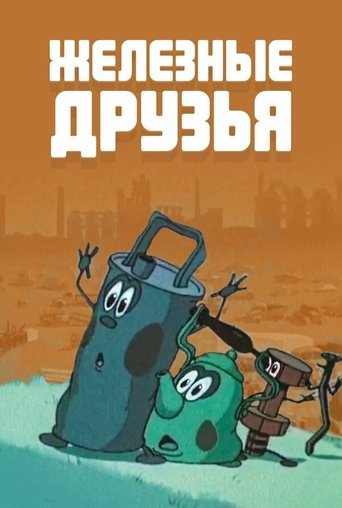
In an abandoned dump, old metal objects are thrown out - a kettle, a can, a screw with a screw, and a rusty little carnation. They feel lost and unnecessary to anyone. And then another and insidious rust is selected to destroy the poor. But suddenly they learn that there are such points where they can still come in handy and already serve people in a new guise. Having found this place, friends are surprised to discover that they were not alone in such a deplorable situation and that a whole line of metal things, large and small, lined up for melting.
The rats are out of control in Hamlin; they've taken over the kitchen, but when they take over the King's bedroom, that's the last straw. He posts a $5 reward, which the rats change to $5,000. Alice and Julius accept the challenge; they play a tune and the rats gather around, but they won't fall for the old "follow me into the river" trick. Fortunately, a very powerful vacuum cleaner is nearby, and Alice and Julius suck all the rats into it. The king gives them their reward: $5.
Two bear cubs want to meet Santa despite their mother telling them that Santa does not exist. With the help of the park ranger, their wish might come true!
The Roteò make people happy with their somersaults and acrobatics, until their abilities are taken away and they must find a way to get them back.
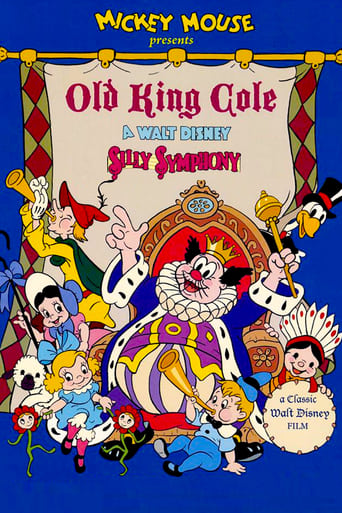
Old King Cole throws party and invites all of the Mother Goose characters. He warns them that they must leave at midnight. Another collection of characters puts on a stage show. The Ten Little Indian Boys get everyone dancing along. The Hickory Dickory Dock mice announce midnight, and everyone leaves, back into their books.
A look at the creation of “evangelion: Another Impact.”
McGruff, Drew Barrymore, and a rag tag band of kids make a rock video about "saying no to drugs."
Santa's sled crash-lands in the desert where some children and a herd of magic camels help get him back in the air.
A Valentine's Day special featuring rock and roll music set to scenes from Disney animation.
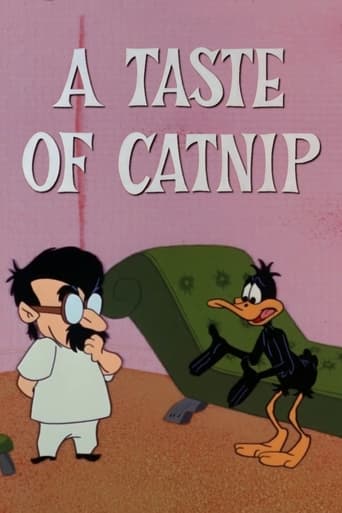
Daffy Duck goes to a doctor after he realizes that he is starting to act like a cat. Daffy finds himself drinking milk out of saucers.
A boy receives a Velveteen Rabbit for Christmas. The Velveteen Rabbit is snubbed by other more expensive or mechanical toys, the latter of which fancy themselves real. One day while talking with the Skin Horse, the Rabbit learns that a toy becomes real if its owner really and truly loves it. The Skin Horse makes the Velveteen Rabbit aware that "...once you are Real you can't become unreal again. It lasts for always."
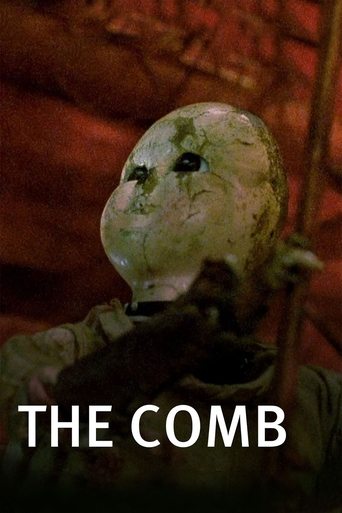
A porcelain doll’s explorations of a dreamer’s imagination.
A man is sitting in a dark room, looking anxious, while his tomcat explains the man why he needs some privacy.
"2053" - This is the number of nuclear explosions conducted in various parts of the globe. "This piece of work is a bird's eye view of the history by scaling down a month length of time into one second. No letter is used for equal messaging to all viewers without language barrier. The blinking light, sound and the numbers on the world map show when, where and how many experiments each country have conducted. I created this work for the means of an interface to the people who are yet to know of the extremely grave, but present problem of the world."
A young Bulgarian girl digs into her grandfather's turbulent life in an attempt to unravel the past and find answers and explanations for the catastrophic fall of communism.
In 1901, a young elf matches wits with a masked villain in an animated adventure set in a world of mechanical air ships, classic automobiles, and other curious inventions.
The Berenstain Bears Comic Valentine is an animated television special based on the Berenstain Bears children's book series by Stan and Jan Berenstain. Produced by Buzz Potamkin and directed by Mordicai Gerstein and Al Kouzel, the program made its debut on NBC on February 13, 1982.
Two duelling birds get the urge to change their plumage. A blue jay wants to be decked out in the green of cedar, and a loon dons the burnished red of oak leaves, but neither bird foresees the consequences of vanity.
With the screen split asymmetrically, one part in positive, the other negative, the film documents the evolution of simple celled organic forms into chains of cells then more complex images from tribal cultures and contemporary modernist concepts. The images react, interpenetrate, perhaps attack, absorb and separate, until a final symbiosis (or redemption?) is achieved.
Activate your FREE Account!
You must create an account to continue watching